
Neural Induction and Differentiation of ESCs and iPSCs
Human pluripotent stem cells (hPSCs), including human embryonic stem (ES) cells and induced pluripotent stem (iPS) cells, are self-renewing cells that have the potential to develop into cells of all three germ layers, including the ectoderm. The ectoderm gives rise to the neural tube which includes all cells of the central nervous system including the brain. Since human brain tissue is hard to come by ES and iPS cells hold tremendous potential as a more representative model for studying human neurological development and disease. Being able to generate patient-specific differentiated cells bridges the gap between studies using animal models and clinical research.
We've created these resources to support your hPSC-derived neurological development and disease research, and to give you a window into the exciting research being done by others in the field.
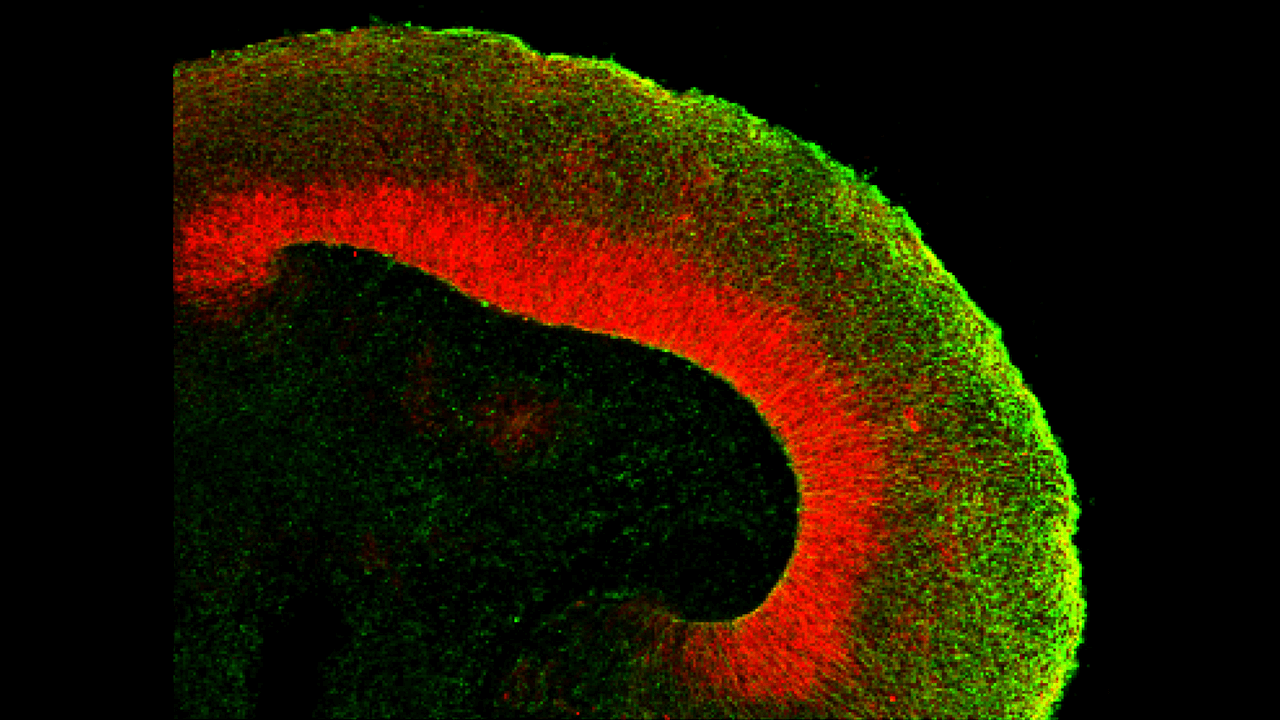
Brains in a Dish: Using Cerebral Organoids to Study Human Brain Development and Disease
What are ‘mini-brains’, and how are they being used to study neurological development and disease? Dr. Oliver Wüseke, who works with cerebral organoids as a PostDoc in the Knoblich Lab at IMBA Vienna, gives an overview of the cerebral organoid field and discusses different techniques and results emerging as researchers increasingly adopt cerebral organoid technology to study brain development and disease.
View Now >- How to Choose the Right Neural Cell Culture Model for Your Research QuestionIn this Innovation Showcase talk from ISSCR 2022, our Associate Director of Neural Biology, Dr. Erin Knock, discusses the applications of in vitro model systems and demonstrates how º£½ÇÆƽâ°æ’s tools can help overcome barriers to neural stem cell research.
- º£½ÇÆƽâ°æ Journal Club: Patient-Derived Alzheimer’s Disease ModelingDr. Erin Knock discusses the applications of pluripotent stem cell-derived lines to investigate Alzheimer's Disease
- The Road to Functional Human Neuronal Circuits in VitroActive neurons are a vital part of a functioning brain and an essential component of in vitro neurological models. In this webinar, Dr. Cedric Bardy talks about why and how he invented BrainPhys™, a new neuronal basal medium that better supports neuronal function in vitro, described in C Bardy et al. Proc Natl Acad Sci USA, 2015. Dr. Bardy describes how BrainPhys™ increases the physiological relevance of primary and hPSC-derived neuronal cultures in vitro.
