
Human Leukocyte Antigen (HLA) Typing and Analysis
Human leukocyte antigen (HLA) molecules are highly polymorphic membrane proteins that play a central role in immune recognition and compatibility. In transplantation diagnostics, differences in HLA expression between donor and recipient can lead to immune rejection, making accurate HLA typing and crossmatch testing essential for successful outcomes. Advances in molecular methods such as next-generation sequencing (NGS) now enable high-resolution HLA genotyping and sensitive chimerism monitoring. These technologies allow laboratories to detect subtle genetic variations and monitor HLA chimerism or loss of heterozygosity (LOH), both of which can have critical implications for transplant success and relapse detection1,2.
In an era where virtual crossmatch and antibody profiling tools are expanding, physical crossmatch testing remains a vital and complementary tool for confirming donor-recipient compatibility3. º£½ÇÆƽâ°æ supports these workflows with reliable cell isolation and enrichment solutions that help your laboratory perform accurate, reproducible HLA analysis with confidence.
Below, explore a curated collection of educational resources that highlight best practices, innovations, and expert insights in HLA testing, crossmatch analysis, and chimerism monitoring.
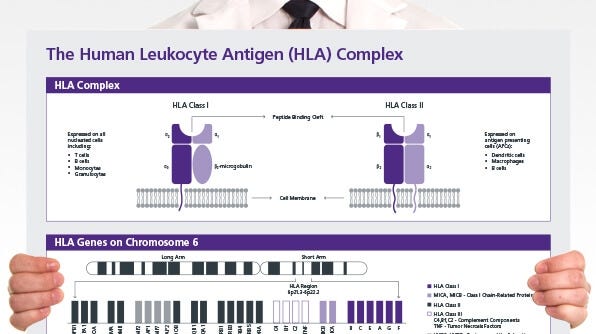
The Human Leukocyte Antigen (HLA) Complex
This wallchart provides an overview of the human leukocyte antigen (HLA) complex, HLA genes and nomenclature of HLA alleles.
Get Your Free Copy >- Automate Cell Isolation with the RoboSepâ„¢-S Cell Separation InstrumentStreamline your cell isolations using the fully automated RoboSepâ„¢-S
- Cell Isolation Directly from Whole Blood without RBC Lysis or Centrifugation: EasySepâ„¢ DirectIntroduction to the EasySepâ„¢ Direct immunomagnetic cell separation platform
- Isolate Highly Purified Cells for HLA Analysis with RosetteSepâ„¢ Immunodensity Cell IsolationLearn how RosetteSepâ„¢, a rapid cell separation procedure for isolating highly purified cells directly from whole blood, can help increase your sample processing capabilities and provide clear, reliable HLA test results
- How to Isolate Cells Directly from Whole Blood Using the EasySepâ„¢ Purple/Silver MagnetsHow to isolate highly purified immune cells directly from whole blood and takes as little as 20 minutes from start to finish
- How to Isolate Cells Directly from Whole Blood - EasySepâ„¢ Direct Protocol, EasyEights MagnetHow to isolate highly purified immune cells from up to 16 whole blood samples at once with EasySepâ„¢ Direct on the EasyEights EasySepâ„¢ Magnet and the protocol takes as little as 25 minutes from start to finish
- How to Isolate Cells Directly from Whole Blood Using the Easy 50 EasySepâ„¢ Magnet: 30-Minute ProtocolHow to isolate highly purified immune cells directly from whole blood samples of up to 30 mL with and the protocol takes as little as 30 minutes from start to finish
- The Nuts and Bolts of Lineage Chimerism TestingChimerism analysis is used to monitor the outcome of allogeneic hematopoietic stem cell transplantation. By looking at the presence of donor leukocytes within specific cell subsets of the host’s peripheral blood, one can assess the success of donor cell engraftment or detect early graft failure, rejection, or relapse. Prior to performing chimerism analysis, different cell subsets must be isolated from the same sample to perform lineage-specific analysis. In this webinar, Dr. Cathi Murphey (Immunogenetics Lab Director; Southwest Immunodiagnostics, Texas) will discuss available technologies for isolating different cell subsets from the same sample and improving cell purity prior to chimerism analysis.
